
Built for every industry. Trusted by global brands bringing privacy, performance, and intelligence to the edge.
Contact Us
Sensory’s voice AI solutions deliver robust multi-lingual capabilities for wake words, speech-to-text, commands, and authentication, powering products from smart home devices to automotive systems worldwide.
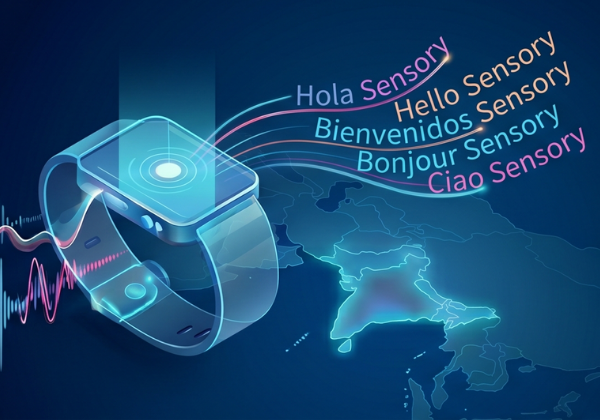
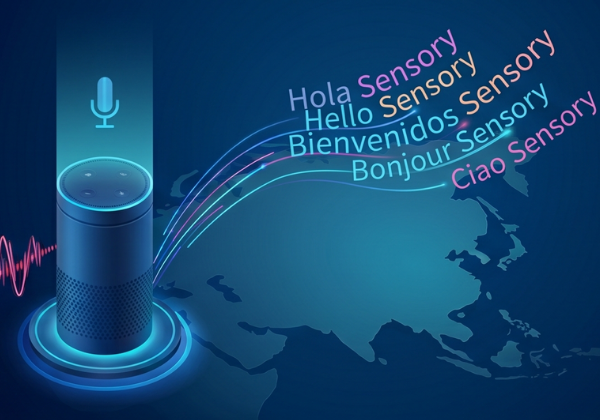
A scalable architecture that deploys dozens of languages across SDKs with easy customization and integration.
Step 1: Choose Languages and Capabilities
Select from 35+ languages for wake words, STT, commands, or biometrics based on target markets and use cases like automotive or wearables.
Step 2: Customize Models with VoiceHub
Use VoiceHub to build custom wake words, intents, and grammars in your chosen language, adjusting for dialects, accents, and hardware limits.
Step 3: Integrate on Any Platform
Deploy language models via Sensory’s SDKs on major OS and silicon, reusing code across devices with consistent APIs for multi-region products.
Step 4: Connect to LLMs and Services
Edge-based language processing captures speech in native tongues, transcribes accurately, and passes to LLMs for multi-turn global interactions.
Step 5: Tune, Test, and Launch Globally
Fine-tune thresholds for noise, accents, and power; test across languages; deploy fleets with over 99% accuracy in real-world conditions.
Models support under-resourced languages like Bengali and Swahili, expanding reach without cloud dependency.
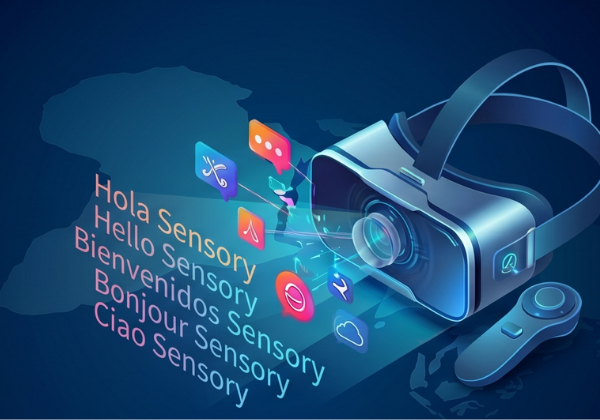
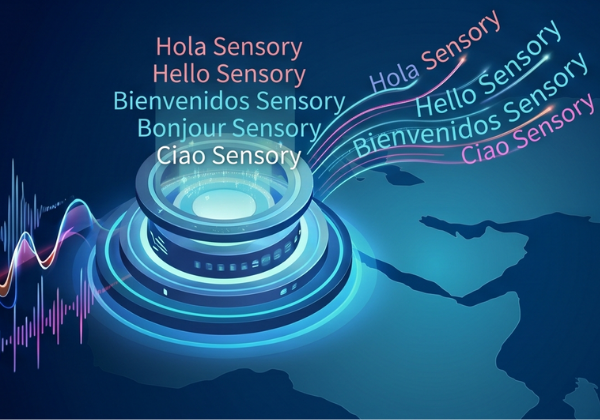
Faster global launches, authentic user experiences, and future-proof AI with one vendor’s broad coverage.
Key details on Sensory’s multi-lingual voice AI capabilities.
Sensory supports 35+ languages across wake words, STT, commands, and biometrics, including Mandarin, Spanish, Arabic, Hindi, Japanese, and more.
Key languages include Afrikaans, Arabic, Bengali, English (various), French, German, Hindi, Japanese, Korean, Mandarin, Portuguese, Russian, Spanish, Swahili, Thai, Turkish, Vietnamese, and others.
Yes, VoiceHub enables branded or user-defined wake words and commands in 25+ languages with dialect support and tuning options.
All major platforms including Android, iOS, Linux, Windows, RTOS, MCUs, and DSPs, with models optimized for each.
On-device multi-lingual wake detection and STT provide accurate transcripts in native languages to LLMs, enabling privacy-focused global voice experiences.


