Built for every industry. Trusted by global brands bringing privacy, performance, and intelligence to the edge.
Contact Us
On-device language understanding that delivers fast, reliable conversations without cloud dependency.
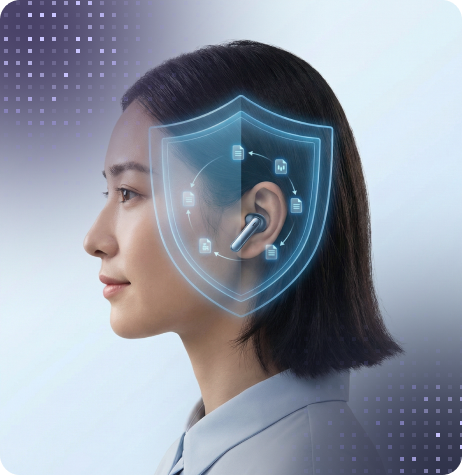



















































Sensory Micro Language Models are compact natural language understanding engines designed for embedded systems. They interpret user intent, context, and meaning locally, enabling conversational voice experiences without relying on servers, large models, or internet connections. For more resource constrained solutions, Sensory provides Custom Grammars for precise, on-device speech recognition for defined commands and structured phrases. They are ideal for embedded products that need predictable inputs like “Set temperature to 72 degrees” or “Turn on lights” and can support large vocabularies and work reliably in noisy environments.
Request the product brief
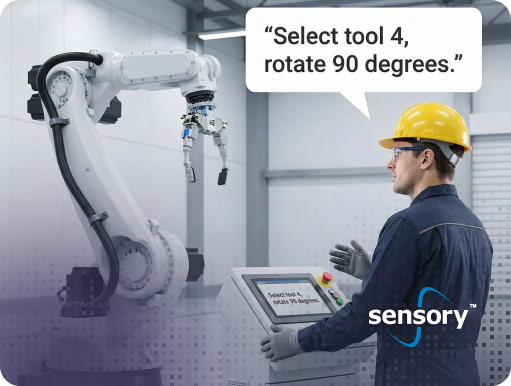
Purpose-built for low-latency, efficient on-device language understanding


Grammars tuned for structured vocabularies with predictable commands and natural language context understanding that will interpret the meaning of unstructured text.

Solutions work with grammar-based vocabularies and statistical language models with predictable behaviors that avoid hallucinations common in generative models.

Designed to run on resource-constrained edge hardware.

Developers can build grammars themselves or engage Sensory experts.
A simple, efficient pipeline built for embedded command recognition.
The engine remains small enough to run on DSPs and MCUs for wearables and IoT devices while supporting surprisingly large vocabularies.

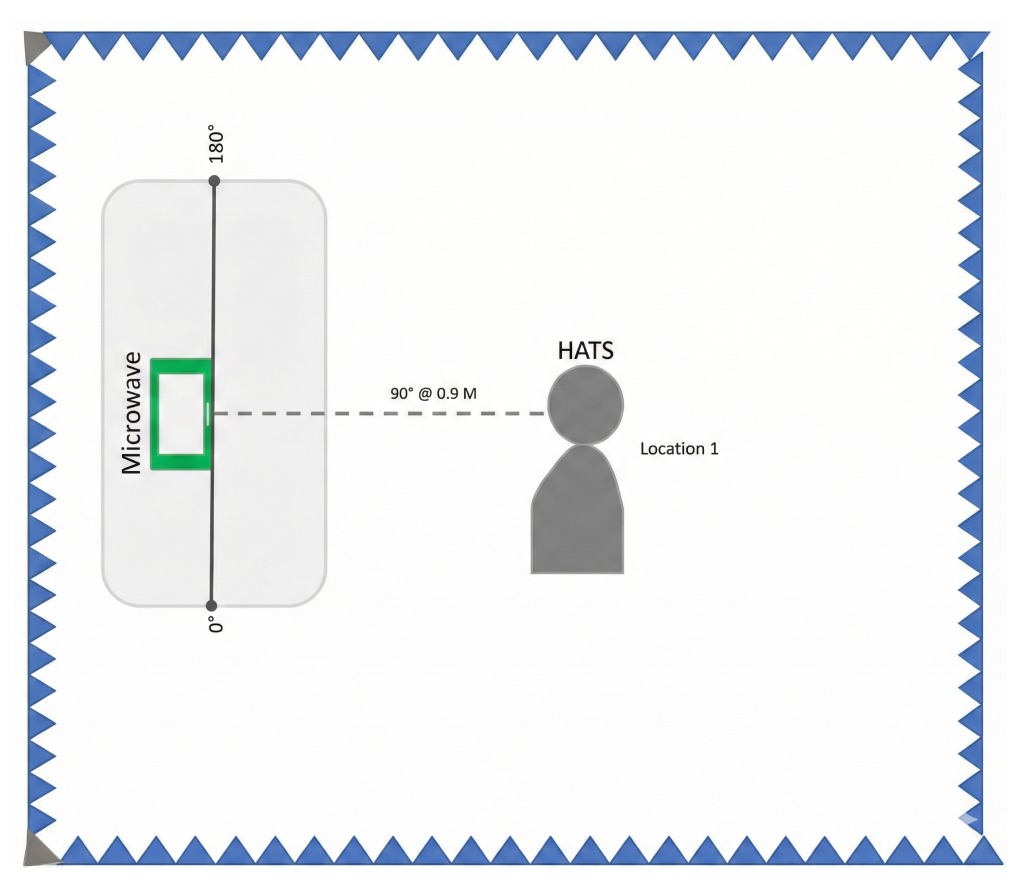
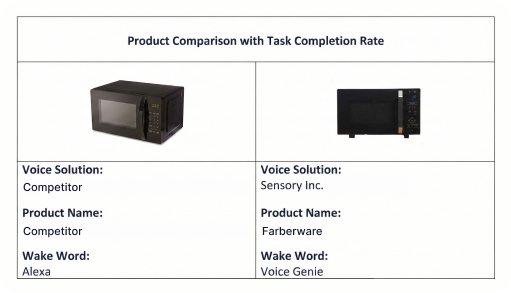
The image is from a third party test of a voice activated microwave. The Head and Torso Simulator (HATS) is in a sound booth presenting 40 male and female utterances at just under a meter of distance. Two commercial microwaves were tested with Sensory custom grammars and custom commands powered by a competitor.
A comparison of the Task Completion Rate is as follows:
| Device Under Test | Task Completion Rate |
|---|---|
| Sensory | 93% |
| Competitor | 55% |
See how leading brands use Sensory’s on-device AI to deliver faster, safer, and more intuitive user experiences at scale.
“Sensory’s technology has exceeded our high standards for accuracy, speed, and efficiency. By enabling hands-free control of key functions through voice commands, we’re boosting productivity and streamlining workflows for retail staff. This allows our frontline workers to focus on what matters most – delivering exceptional customer service.”

“By combining MediaTek’s expertise in generative AI technology with Sensory’s strengths in on-device voice AI, the collective efforts of our companies enable significant strides in providing next-level entertainment and security in vehicles powered by MediaTek Dimensity Auto.”
“Sensory’s TrulyHandsfree technology is a key component in making the Piqo not just compact and powerful, but also incredibly user-friendly. This partnership enhances our ability to provide unmatched value and safety to our customers.”

“The smartest TV ever deserves the smartest approach to privacy. With Telly’s use of Sensory’s on-device speech-to-text and voice technologies, we are able to bring extremely fast, low-latency voice commands to the living room.”
“Zoom is passionate about making collaboration easier, but we always put our customer’s privacy and security front and center. Sensory’s technology checked all the boxes for us: accurate, fast and private…”
Interact with real-time AI demos and find out what sets us apart.
Enabling conversational control across embedded products and platforms
Everything You Need to Know
Structured inputs like numbers, units, colors, modes, and predefined device functions, ideal for appliances, wearables, robots, medical devices, and tools.
A Micro Language Model is a compact NLU engine that understands intent and context without relying on large generative models or cloud processing.
Micro Language Models are smaller, deterministic, and designed for embedded systems, avoiding hallucinations and unpredictable outputs.
Depending on memory and chip constraints, it can support hundreds of commands across structured and unstructured vocabulary sets.
Yes. It integrates seamlessly with Sensory wake word and speech-to-text technologies.
Grammars can be built through Sensory VoiceHub or you can engage Sensory’s Professional Services team for more complex application needs.