
Built for every industry. Trusted by global brands bringing privacy, performance, and intelligence to the edge.
Contact Us

A serial entrepreneur with an IPO, an acquisition, 50+ patents, and a lifetime in audio-tech innovation. Todd has deep experience licensing and working with the largest tech companies in the world, including Amazon, Apple, Google, Microsoft, Samsung, and many others.
See how Sensory technology transforms user experiences — instantly, privately, and securely.


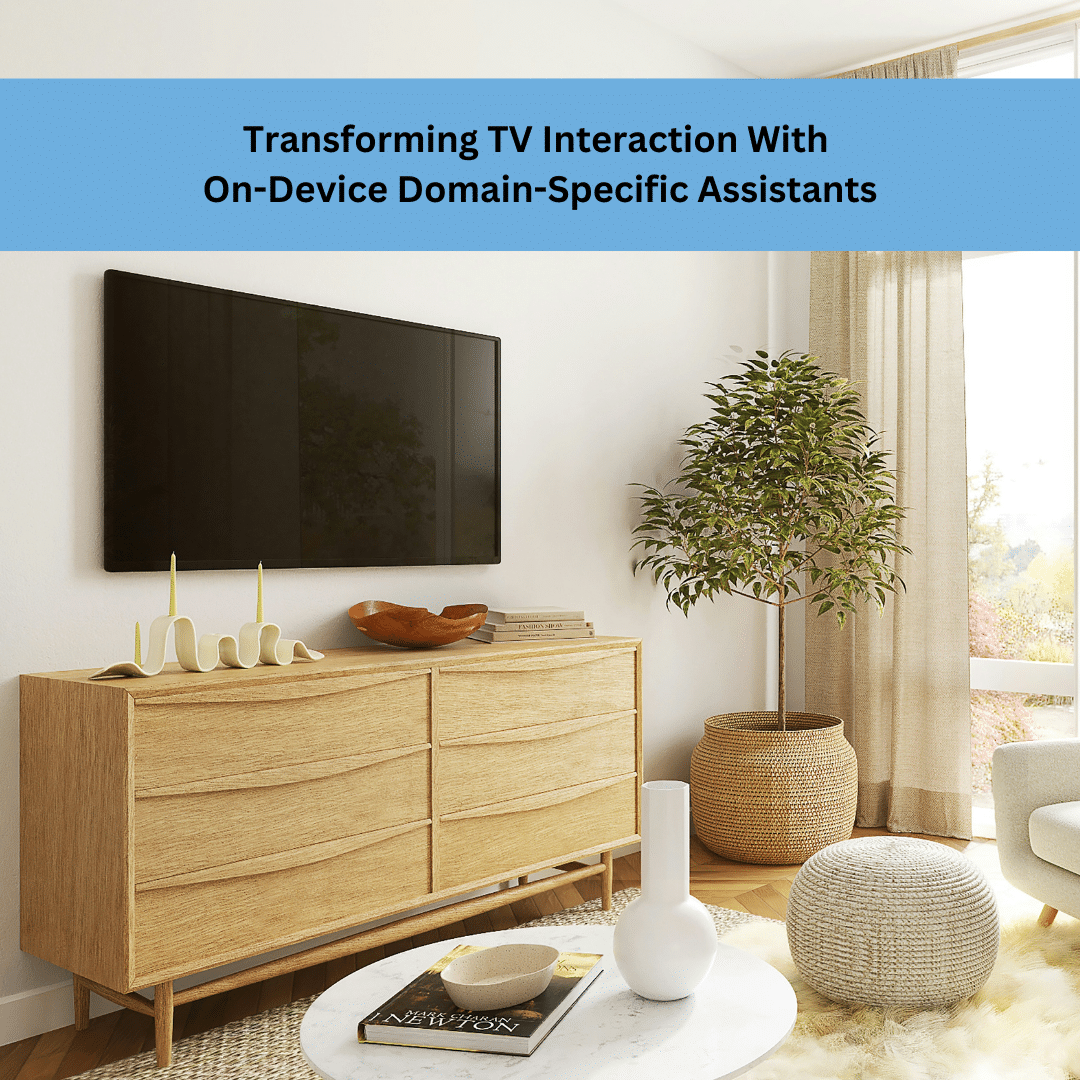
Almost 97% of households own a TV, typically in the social hub of the house, the living room. By now we’re all used to talking to Alexa and Siri, and now that functionality is moving to other key devices in the home, like televisions. Users can now interact naturally with their TVs using only their voice – from simple commands like turning up the volume and changing the channel, to complex, AI-driven interactions like learning more about the ads and shows on their screen. This new way of (naturally) interacting with our TVs is powered by Sensory’s TrulyNatural Speech-to-Text (STT) technology.
While many companies offer voice commands, Sensory’s on-device TrulyNatural STT stands out as a clear choice, offering benefits like:
Sensory’s TrulyNatural STT, even with its small size, doesn’t compromise on efficiency and functionality:
The Telly-Sensory collaboration serves as a compelling use case for home electronics manufacturers and media companies involved in screen-based devices. It demonstrates the feasibility and benefits of implementing fully local, natural language control across various devices, from TVs to PCs, tablets, and other in-home devices.
By positioning the TV as a central smart device in the home, this technology opens up new possibilities for home automation and entertainment control. The ability to process hundreds of voice commands locally not only enhances privacy but also paves the way for more sophisticated and responsive smart home ecosystems.
Beyond TVs, Sensory’s on-device domain-specific voice assistants have potential across industries, such as:
Each of these applications benefits from the key advantages of on-device processing: enhanced privacy, faster response times, and domain-specific accuracy, all while reducing ongoing cloud service costs.
Get started with your domain-specific voice assistant by contacting Sensory today!
 Todd Mozer
The “Always‑Listening” Paradox in Wearables Wearable OEMs are under pressure to deliver a voice...
 Todd Mozer
Sensory recently hosted a special live webinar celebrating more than three decades of pioneering work...
 Todd Mozer
Sensory recently hosted a webinar, Personalized Devices: The Power of User-Defined Wake Words, featuring...


